

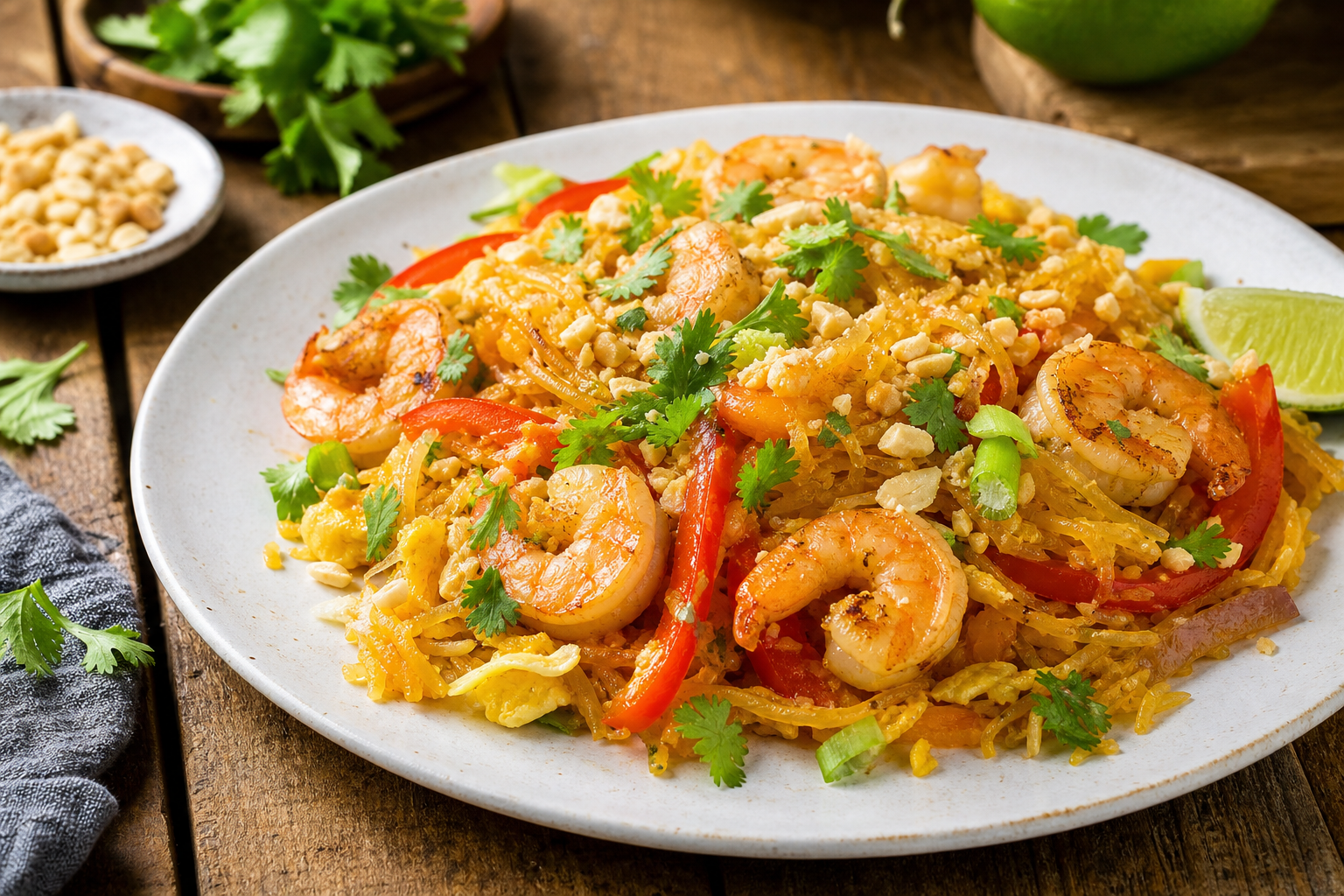
This keto spaghetti squash Pad Thai offers a delicious low-carb twist on the Thai classic, using roasted spaghetti squash strands instead of noodles.
Tender shrimp are sautéed with garlic and veggies, tossed in a tangy, savory sauce to create an authentic taste experience.
Ideal for those following a ketogenic diet or anyone looking to reduce carbs without sacrificing flavor.
Why You’ll Love This Recipe
- Spaghetti squash provides a natural, low-carb noodle substitute with a pleasing texture.
- The savory Pad Thai sauce balances sweet, salty, and tangy flavors to mimic the traditional dish authentically.
- Sautéing shrimp and vegetables quickly preserves their texture and freshness while blending flavors well.
Keto Spaghetti Squash Pad Thai with Shrimp
Enjoy a low-carb version of classic Pad Thai made with roasted spaghetti squash and sautéed shrimp, featuring authentic Thai flavors in a keto-friendly dish.
- Prep time
- 15 minutes
- Cook time
- 25 minutes
- Servings
- 4
- Yield
- 4 servings
Ingredients
- 1 medium spaghetti squash (about 3 pounds / 1.4 kg)
- 1 pound (450 g) large shrimp, peeled and deveined
- 2 tablespoons avocado oil or olive oil, divided
- 3 cloves garlic, minced
- 2 large eggs, lightly beaten
- 1 cup (100 g) shredded carrots
- 1 cup (70 g) bean sprouts
- 3 green onions, sliced
- 1/4 cup (15 g) chopped fresh cilantro
- 1/4 cup (30 g) crushed unsalted peanuts
- For the sauce:
- 3 tablespoons tamari or soy sauce (gluten-free if desired)
- 1 tablespoon fish sauce
- 1 tablespoon lime juice
- 1 tablespoon erythritol or preferred keto-friendly sweetener
- 1 teaspoon toasted sesame oil
Instructions
- Prepare the spaghetti squash Preheat oven to 400°F (200°C). Cut the spaghetti squash in half lengthwise and scoop out seeds. Place cut side down on a baking sheet lined with parchment. Roast for about 40 minutes or until tender and strands separate easily with a fork. Let cool slightly, then scrape out strands into a bowl.
- Make the Pad Thai sauce In a small bowl, whisk together tamari, fish sauce, lime juice, erythritol, and toasted sesame oil. Set aside.
- Cook the shrimp and vegetables Heat 1 tablespoon oil in a large skillet or wok over medium-high heat. Add shrimp and cook until pink and cooked through, about 2-3 minutes per side. Remove shrimp and set aside. Add remaining oil to skillet and sauté garlic until fragrant, about 30 seconds.
- Add eggs and veggies Pour beaten eggs into skillet and scramble until just set. Stir in shredded carrots, bean sprouts, green onions, and cooked shrimp. Cook for 1-2 minutes until vegetables are slightly tender.
- Combine with spaghetti squash and sauce Add spaghetti squash strands to the skillet along with the prepared sauce. Toss well to combine and heat through, about 2-3 minutes. Taste and adjust seasoning if needed.
- Serve Divide the Pad Thai among plates. Garnish with chopped cilantro and crushed peanuts. Serve immediately.
Helpful Tips
- Peel shrimp if frozen and pat dry before cooking to avoid excess moisture.
- To speed up spaghetti squash cooking, microwave cut halves for 6-8 minutes before roasting if desired.
- Customize veggies by adding bell peppers or snap peas for more crunch.
Storage and Make-Ahead
Store leftover Pad Thai in an airtight container in the refrigerator for up to 3 days.
Reheat gently in a skillet over medium heat, stirring occasionally until warmed through.
Note: Spaghetti squash can lose some texture when stored cooked; consuming within 2 days is best for quality.
Frequently Asked Questions
Can I make this recipe without shrimp?
Yes! You can substitute shrimp with chicken, tofu, or extra vegetables to suit your preference and dietary needs.
Is spaghetti squash really keto-friendly?
Yes, spaghetti squash is low in carbohydrates compared to traditional noodles, making it a popular keto-friendly vegetable alternative.
How do I know when spaghetti squash is cooked?
The flesh should be tender and strands should easily separate with a fork when the squash is roasted properly.


Leave a Reply